
Only after moving from one place to another, from home to home, city to city, and country to country, do we realize the impact that spaces and places have on us. Kelowna is no different.
Kelowna often calls itself a city, but it behaves more like a landscape. It stretches horizontally instead of vertically, dissolving into forests and farms, packing its people into neighborhoods and a couple of skyscrapers, sending students climbing a long hill just to get to a lecture, and bringing warm summers and even warmer smoke. You cannot really separate “campus life” from the land here — the winter darkness, summer heat, changing clouds, valley smoke. Being a student at UBC Okanagan means learning to read the city like weather.
Unlike universities located in large metropolitan cities, UBCO is shaped, sometimes gently and sometimes dramatically, by the geography around it. It is not like the foggy mountaintops of Simon Fraser University or the urban buzz of UBC Vancouver. Kelowna’s semi-rural setting, extreme seasonality, and valley climate create a student experience that is uniquely tied to place. For many students, adapting to campus life here means adapting to the Okanagan itself.
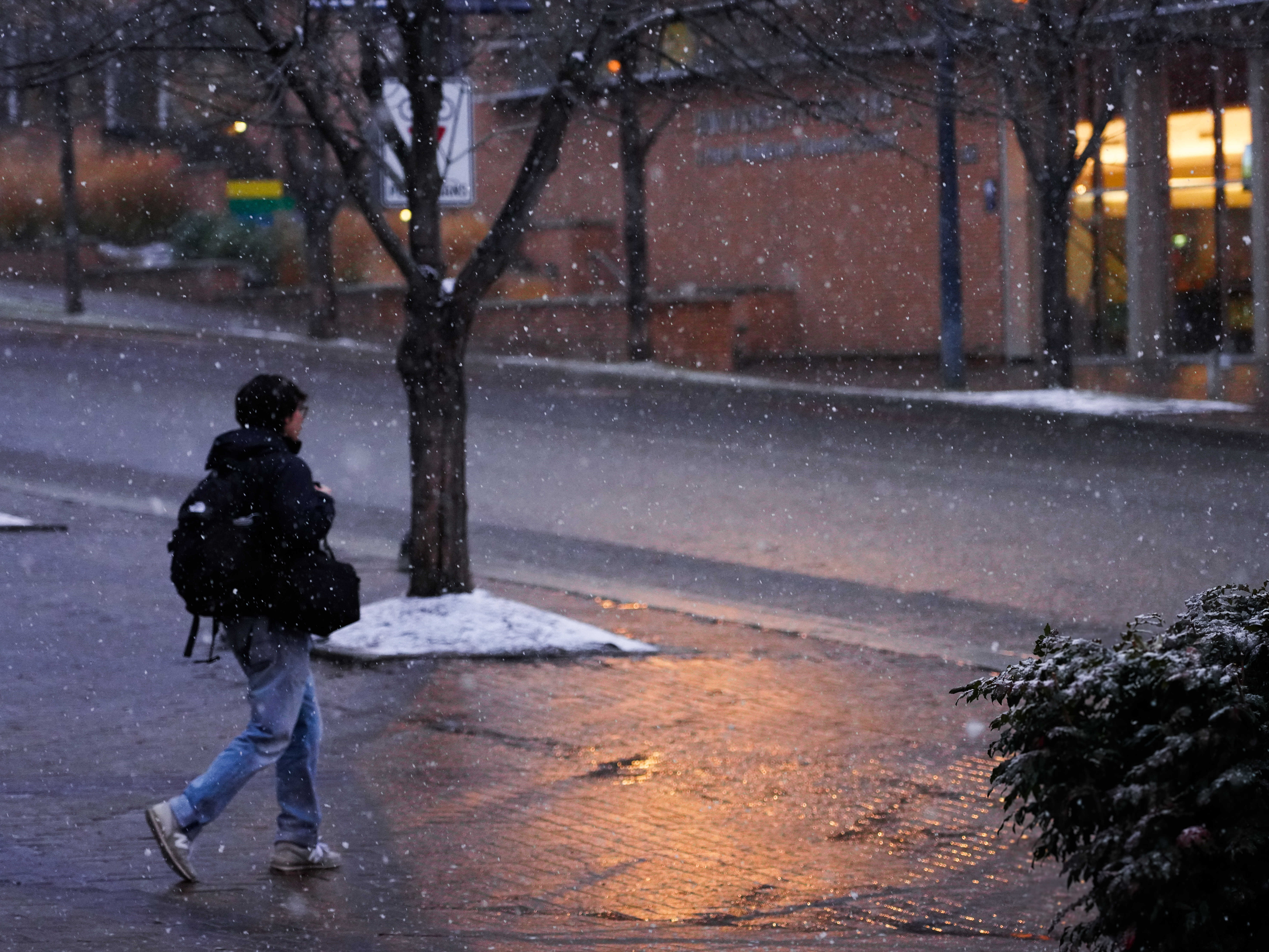
One thing most of us can agree on is feeling unusually down during the colder season. But why is that? Seasonality is not just a backdrop. It is structural. Psychological research shows that seasons influence mood, energy levels, attention, and even moral values. In winter, lower sunlight correlates with symptoms of seasonal affective disorder — fatigue, reduced motivation, altered appetite, and sleep. This is partly because reduced daylight affects vitamin D levels and serotonin production, which in turn shape mood. In the Okanagan, this winter contraction is sharper because the valley’s geography intensifies early shadows, magnifies cold winds, and compresses daylight in a way you feel physically.
It becomes harder to tell what part of the exhaustion is academic stress and what part is environmental. When the sky darkens at 3p.m., your brain interprets it as the end of the day, even if your schedule still has 6 hours left.
The routines that felt effortless and fun in September suddenly require negotiation, be it staying on top of meals, maintaining a gym schedule, or even meeting friends begins to feel like you are working against the axial tilt of the earth.
Students often describe how the late bus up the hill in December feels like “walking into a cave,” how the wind bites differently when there is no sunlight left to soften it. This emphasizes what researchers call circadian disruption. When your internal clock expects daylight, but the city delivers darkness, then your mood, focus, and energy drift out of sync. Human geography studies argue that these emotional shifts are inseparable from place: the land physically reshapes the psychological landscape.
Heat, sun exposure, and time spent outdoors reshape cognition and social behaviour in specific ways, too. Sunlight increases serotonin levels, which boosts mood and sociability. People become more open to conversation, more lively, and more inclined to make plans. High temperatures boost physiological arousal, which can amplify emotional states, thus making people more expressive, more reactive, and sometimes even more impulsive. These factors blend to create an environment that helps students feel more alert and more attuned to their environment.
But what appears to be pure freedom also carries subtle pressures.
When Kelowna bursts into its postcard self with blue water, full patios, and crowded beaches, many students feel as if they are supposed to participate in the season. There is an unspoken expectation to be out, to be social, to soak up every ounce of the good weather after months of winter contraction. Summer becomes a performance in its own way: a race to stretch yourself thin, to “make up for time,” to prove that you are living the Okanagan lifestyle correctly.
The heat adds to the complexity as well. Psychological research suggests that rising temperatures do not just lift moods; they can heighten irritability and lower patience. Everything from honking in traffic to rates of aggression and conflict tend to spike in the hotter months. The land sets the rhythm of summer, even if everyone responds to it differently.
And then, sandwiched between real seasons, comes the valley’s semi-regular fifth season — smoke. It briefly changes daily life.
People retreat indoors or leave the city entirely, and the air quality index becomes something you monitor as routinely as the weather. The same landscape that felt idyllic in July suddenly feels intrusive and almost adversarial. Smoke season creates its own form of seasonality: a sharp, disruptive period where environmental stress piles onto academic pressure, tightening the atmosphere of the semester in a way you can actually feel physically. In this sense, the surrounding landscape of Kelowna suddenly becomes invasive.
At most universities, the commute is a minor detail – perhaps a bus ride, a SkyTrain, or a quick biking route. But at UBCO, the commute is geography. Academy Way, the main route for students living off campus, is a perfect example of how topography becomes part of daily life. In September, it is scenic with lush green hills, open skies, and pleasant-enough weather that makes the exercise feel enjoyable. By November, it is a different world. The wind speeds up, the sidewalks freeze, buses crawl cautiously, and walking becomes a workout in both stamina and mental strength.
For students without cars, the hill shapes everything from class schedules to social plans. Weekends, holidays, and snowy days delay buses or affect schedules in a way that missing one bus results in a wait of at least 40 minutes for the next one. For those with vehicles, the hill becomes its own economic category: winter tires, parking fees, gas, and the daily decision of whether the weather is “drivable.” It is a catch-22 either way.
It is not that other campuses do not have slopes or hills; it is that at UBCO, elevation becomes a daily negotiation. You do not just walk to class; you plan around the climb. Every morning and evening, the hill decides how early you must leave, how quickly you can get home, and whether a spontaneous meet-up is worth the trek. Some residences sit at what feels like the crest of a hike, their slopes turning a simple errand into a mini trek. Others are positioned beside the campus life core, close to food, study spaces, and social life. Geography quietly and slowly sorts students into different daily rhythms, not by intention but by altitude.
In my personal view, the most important aspect of all this is emotional geography — the idea that places shape our emotions as much as we shape them. If you leave Kelowna changed in some small way, it might just be that you absorbed the geography along the way. It teaches you how to wake early for sunlit commutes, how to tolerate the early dusk, and how to alter your week when the air turns hazy. Most importantly, it teaches you that your body and mind are always in negotiation with the land.


.png)

